


He rode like a rocket, earned like a star, then lost almost everything but found a way to live without bitterness.
Some champions are remembered for what they won, some for what they lost. Freddy Maertens belongs to both, but neither explains him. He was devastating; fast, brave, extravagant in effort and indecently prolific. By the end of 1977 Freddy had won a world road race title, 8 stages in one Tour de France, 13 stages and overall victory in one Vuelta a España, and more than 100 professional races in 2 seasons. He was only 25.
Cycling loves numbers, and Freddy’s numbers shine like beacons down the years. Fifty-two wins in 1976, 53 in 1977, 3 Tour de France green jerseys, 2 world road titles; classics, grand tour stages and week-long and single day races. Freddy was one of the fastest sprinters ever, but not just a sprinter. He was a great rouleur as well as being punchy and durable in the West Flanders tradition. He was all those things at once.
But this is not a story about victory, it’s a story about what happens when the applause stops, the money goes, the people around you disappear, and the man left behind has to decide what really matters.
Fast Freddy
Freddy Maertens’ rise was brilliant, so brilliant it seems it was impossible to sustain. He rode in a way that cobbles melted under his wheels, hills were flattened and riders got out of his way. If a race needed breaking open, Freddy could break it. If it came to a sprint, Freddy could win it. And he did this day after day, emptying rivals of hope.
There was always something excessive about Freddy Maertens. At first, it was excessive speed, ambition, talent and work. He trained with Michel Pollentier in sessions so hard that Maertens remembers they were worse than racing. Seven hours side by side, sometimes not speaking for hours on end. Another day was 4 hours in the morning, broken by food handed up at mid-day by their wives, then 2 hours behind a Derny.
“The harder you train, the easier it is to race,” he says.
It is pure Flandrien logic. Suffer in preparation so racing feels generous. Get harder than the day requires. Let the wind, rain, sand and road file you down until only the useful parts are left. “Callous the mind,” David Goggins says. Train hard, fight easy is the SAS creed.
Yet Maertens’ body was only one part of the machine. His character mattered as well. He was open, confrontational when wronged, but also trusting, too trusting in the end. The same qualities that helped him scare Eddy Merckx, the same refusal to be cowed by reputation, made him vulnerable away from racing. He stood up to people, Maertens said what he thought, but he also believed others when perhaps he shouldn’t. In time, that cost him.

The Fall
The great sporting collapse began in public. After his astonishing seasons of 1976 and 1977, the wins slowed. There were still flashes: 3 Tour stages and another green jersey in 1978; then almost nothing in 1979 and 1980. People said he was finished. Burnt out, used up, another prodigy who ascended too quickly, too soon.
He came back, sort of. In 1981 he won a second world road title in Prague, took 5 stages in the Tour and his third green jersey. It should have been the start of a glorious second act, instead it was a final flare before darkness closed in.
His decline was not just physical; it was financial and emotional, and that affected him deeply. The morale; the inner state a rider needs to go out in bad weather and do the work nobody sees, slowly ebbed away.
“My money problems were the reason,” Maertens told Chris Sidwells when he asked why he could no longer train his way back. “All my money had gone, but the taxman still wanted the tax on it. A pro bike rider needs peace of mind to get on with his job. To go out for 6 hours training in bad weather; in wind and rain, day after day. You must have good morale for that, and I hadn’t. I couldn’t.”
That is one of the most revealing things any champion can say. Cycling loves to pretend that suffering is always physical, but Maertens knows better. A rider can carry pain in his legs, lungs and back, but anxiety sits somewhere deeper. Debt is weight, fear is weight, shame is weight, unpaid tax is weight. So is betrayal. Even Freddy Maertens could not sprint away from that.
Money came in the manner it often comes to young sports stars; quickly, loudly and with tons of advice. He won, he earned and people arrived with opportunities, investments, business schemes and promises. Freddy trusted some of them. He invested; he gave them the money they asked for. Then he went away to race, and when he came home the money had gone.
The cruel part is the tax remained. The fortune had disappeared, but the liabilities hadn’t. Maertens was left, as so many sportspeople and entertainers have been, with the bill for a life others mishandled.
When asked how much he lost, Maertens puts it at 8 or 9 million Belgian Francs. Adjusted for inflation, that is well over a million pounds today. Yet the figure is less important than the way he responded.
Money is supposed to be the measure of success. Sport, especially professional sport, pretends otherwise when it suits, but the machine that supports it says something different. Sponsors, contracts, start money, bonuses, endorsements, criteriums, guest appearances, cars, houses. Win enough, and the world teaches you that wealth is proof. Lose it, and the same world treats you as though you have lost yourself…. But Freddy Maertens refused to accept the position others might see.

Learn and grow
He worked as a guide in cycling museums; first in Roeselare then at the Ronde Van Vlaanderen Centrum in Oudenaarde. It was not the kind of retirement many people would expect for a double world champion. The easy assumption is such work is a comedown. Freddy never saw it like that.
“I enjoy the work here,” told Chris when they first met in Roeselare. “You must not be too proud to learn, we are all learning, that’s life. We all should learn, not stay still, so we grow.”
There is something quietly heroic about that. Not heroic in the old racing sense of a lone rider battling through the rain and mud, though Maertens knew plenty of that, but heroic in a human sense. To lose status and not be bitter. To lose money and not curiosity. To stand in a museum explaining cycling history when you are part of it, and to do it with pride, is very special.
Freddy was proud that before he worked at the Roeselare museum it had about 6,000 visitors a year, after he came it was 28,000. That mattered, not because it was more than the world titles or the Tour stages, but they were his past, this was an achievement in his present.
That’s the secret of Freddy Maertens’ later life. He didn’t live in the past nor in what he lost, he built something new.

No bitterness
However, the fact remains that he earned a fortune through talent, training and suffering, then saw much of it vanish. He was mocked, criticised and written about cruelly. Fans who cheered felt silent, others called him names. The press made insinuations. Cycling can be sentimental about fallen champions from a distance, but not always kind when they fall.
Was he at all bitter, even slightly in darker private moments? “No, there’s no point, you cannot change anything,” he says.
That sentence could be read as resignation, but it felt like freedom. Freddy does not deny the damage, he’s not pretending everyone behaved well. He simply refuses to spend his life paying interest on pain.
It’s in this that Freddy Maertens becomes more interesting than the usual fallen champion story. The familiar version would make him tragic; a brilliant rider who was exploited and discarded, living among the relics of his own greatness. But that’s not who he is. His truth is warmer, complicated maybe, but far more useful.
He made mistakes, he says so. “When you are wrong, you have to say it’s your fault.” That line matters. It is not the same as accepting blame for everything others did. It’s accepting that trust, even when abused, was still a choice that was his to make. Freddy’s generosity, openness and willingness to believe people helped shape his losses, but they also helped shape the man who survived.
“Everybody says I’m too easy,” he says, “That I have the character of my mother. Like her, I agree too easily and it means people can take advantage of me. But you cannot change who you are, can you?”
There is sadness, but no self-pity. Freddy understands himself, recognises the weakness inside the virtue. He sees the softness that cost him money is connected to the humanity that allows him to live without regret, and without his heart becoming hard.
When the conversation with Chris turned again to money, Maertens answers in a way that reveals the real account of his life. “Through all that happened, I always had a good home and the support of my wife for so many years now. We have been together since we were very young. And we have Carine, a daughter with good health. Those things don’t just happen; you must work at them.”

Fortune lost but foundation gained
Freddy Maertens lost a fortune, but not his foundation. He lost popularity for a while but kept his dignity. He lost peace of mind as a pro cyclist but found peace as a man.
The phrase ‘living his best life’ is modern and can sound glib when applied to someone who endured genuine hardship. But in Maertens’ case it fits if we understand it properly. His best life was not the richest version of his life in money. It wasn’t the fantasy retirement of houses, cars and unbroken applause. His best life was the one he made from what remained.
A good home. A loyal wife. A healthy daughter. Work that kept him connected to cycling. Learning new things, taking responsibility, refusing bitterness and welcoming visitors. Being Freddy Maertens.
That might sound modest set against 53 wins in a year, but perhaps it is more. Winning is partly talent, but survival requires character. It requires patience, love and worth.
It’s tempting to reduce Freddy Maertens to a cautionary tale; be careful who you trust, don’t enter business while racing, keep control of your money. Beware of the people who arrive when you win and vanish when you struggle. All of that is true, and Maertens himself would likely agree with much of it, but he deserves more than to be used as a warning.
He was one of the greatest riders of his era, and for a while one of the greatest riders in the world. He challenged Eddy Merckx when challenging Merckx was almost an act of rebellion. He won with a brilliance that still looks unreal. He came back when people laughed at him. He won the world title twice. He gave cycling some of its most spectacular statistics.
Then he gave it something quieter; an example of how to live after loss. Not perfectly, not sentimentally and without regret. He admits the big mistakes; “I shouldn’t have got into business while I was racing,” he says, but regrets don’t own him.
Freddy Maertens’ life after wealth was not to be a museum piece. It was not a man trapped among old jerseys and photographs, endlessly reliving the applause. It was active, useful and engaged. He learned and worked and brought people into cycling’s history. He remains proud of what he could still achieve.
The rocket came crashing back to earth, but that was not the end of the story. The earth is where life is lived, and Freddy Maertens, for all he lost, seems to understand that better than most.
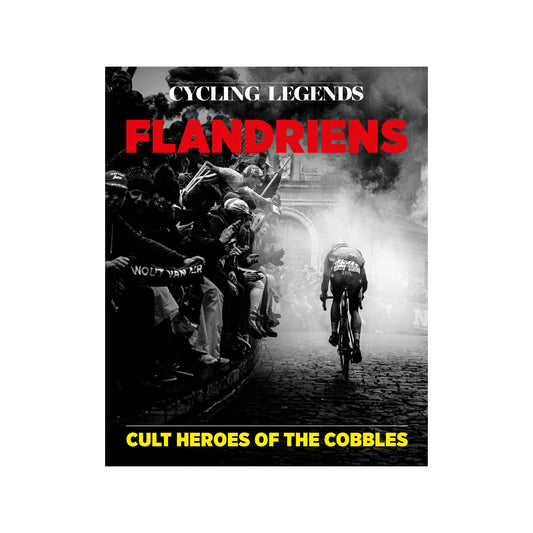
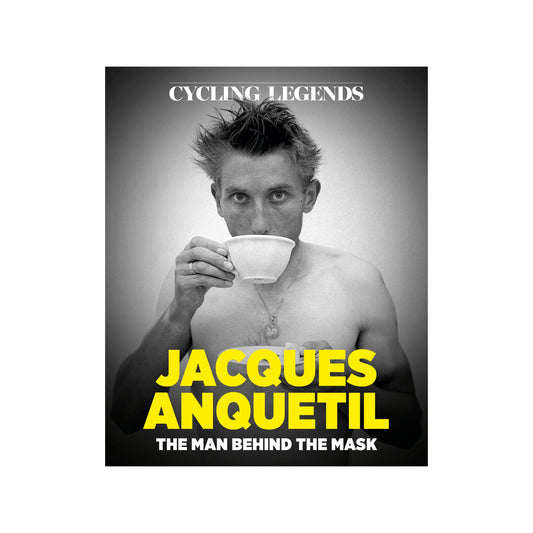
Read more about Freddy in Cycling Legends 04: Flandriens - https://cyclinglegends.co.uk/products/cycling-legends-04-flandriens-by-chris-sidwells
Photos: John Pierce Photosport International
4 comments
As always Chris, a wonderful article, fact filled and atmospheric. Thanks so much for keeping cycling history alive through your writing.
What a fabulous well written story about an incredible man , I have had the pleasure of meeting Freddy on a few occasions whilst in Belgium to watch the Classics and also visiting the museum in Roeselare . Freddy welcomed both me and my friend by our first names when we met him at the Ghent Wevelgem when he brought his books and signed them for us . Once a Legend always a Legend.
What a fabulous well written story about an incredible man , I have had the pleasure of meeting Freddy on a few occasions whilst in Belgium to watch the Classics and also visiting the museum in Roeselare . Freddy welcomed both me and my friend by our first names when we met him at the Ghent Wevelgem when he brought his books and signed them for us . Once a Legend always a Legend.
Dear Chris …. why has this 70 year old slightly above average cyclist got a large lump in his throat? Well probably because I feel humbled by the man and so, so joyous because of the author’s skills in his art.
Many thanks,
Doug